
ceramic tile display drawer,classic black-cc2004
The CC2004 uprights are 45×45mm square tube with 2.5mm wall thickness. We publish the cross-section spec because we want you to compare it against anything else on the market.
Showing 201–220 of 2720 resultsSorted by latest

The CC2004 uprights are 45×45mm square tube with 2.5mm wall thickness. We publish the cross-section spec because we want you to compare it against anything else on the market.

We pre-drill and tap every threaded insert on the CC2008 before finishing, so the powder coat never fills the threads. Your assembly bolts go in clean every time.

We designed the CC2087 after visiting 30+ tile showrooms and noticing the same bottleneck: staff wasting time lifting heavy sample boards. This rack lets one person reorganize an entire display wall i

We pre-drill and tap every threaded insert on the CC2063 before finishing, so the powder coat never fills the threads. Your assembly bolts go in clean every time.

Showrooms in coastal cities face salt-air corrosion that eats standard powder coat in under a year. The CC2064 undergoes a 72-hour salt spray test before it leaves our facility.

Every CC2047 ships with a printed assembly guide that uses only pictures — no English required. We have shipped to 50+ countries and the feedback on our instructions has been universally positive.

We keep the CC2049 in stock across 3 standard widths and 5 slot configurations. Most orders ship within 7 business days because we build frames ahead of demand.

Showrooms in coastal cities face salt-air corrosion that eats standard powder coat in under a year. The CC2051 undergoes a 72-hour salt spray test before it leaves our facility.

We pre-drill and tap every threaded insert on the CC2027 before finishing, so the powder coat never fills the threads. Your assembly bolts go in clean every time.

The slot liners on the CC2030 are made from EPDM rubber, the same material used in automotive weather seals. They do not harden, crack, or leave marks on your tile edges.

We keep the CC2035 in stock across 3 standard widths and 5 slot configurations. Most orders ship within 7 business days because we build frames ahead of demand.

Showrooms in coastal cities face salt-air corrosion that eats standard powder coat in under a year. The CC2037 undergoes a 72-hour salt spray test before it leaves our facility.

The CC2038 frame is engineered with a center of gravity 40% below the midpoint. Even with all sample panels pulled out simultaneously, the rack stays planted.


Showrooms in coastal cities face salt-air corrosion that eats standard powder coat in under a year. The CC2040 undergoes a 72-hour salt spray test before it leaves our facility.

The CC2059 uprights are 45×45mm square tube with 2.5mm wall thickness. We publish the cross-section spec because we want you to compare it against anything else on the market.

The CC2054 frame is engineered with a center of gravity 40% below the midpoint. Even with all sample panels pulled out simultaneously, the rack stays planted.

The CC2111 frame uses CNC-welded joints throughout — every structural connection is a continuous weld bead, not a bolt and washer. This doubles the load rating compared to bolt-together designs.

Showroom managers love the CC2118 because samples stay clean longer — the angled display means less dust settles on the tile faces, reducing daily cleaning time.


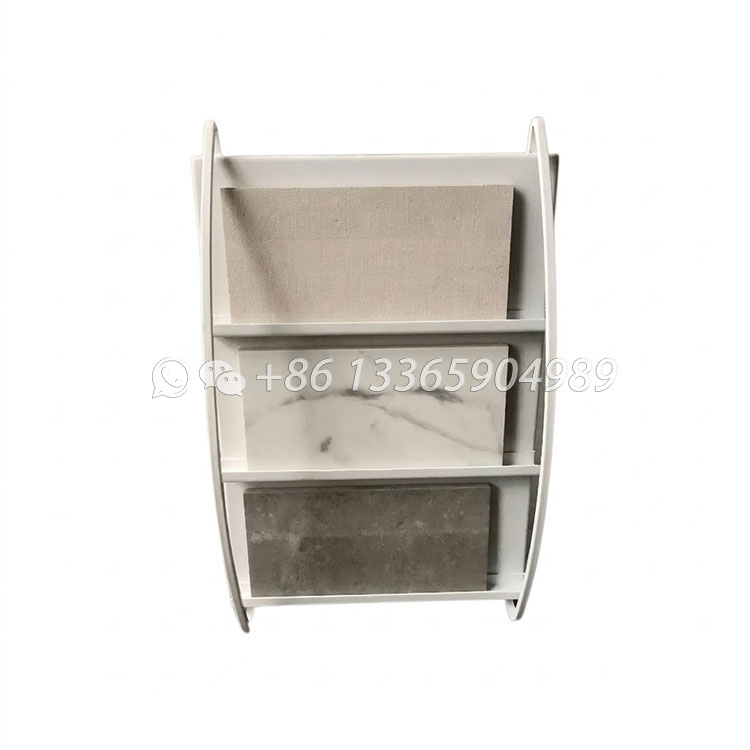
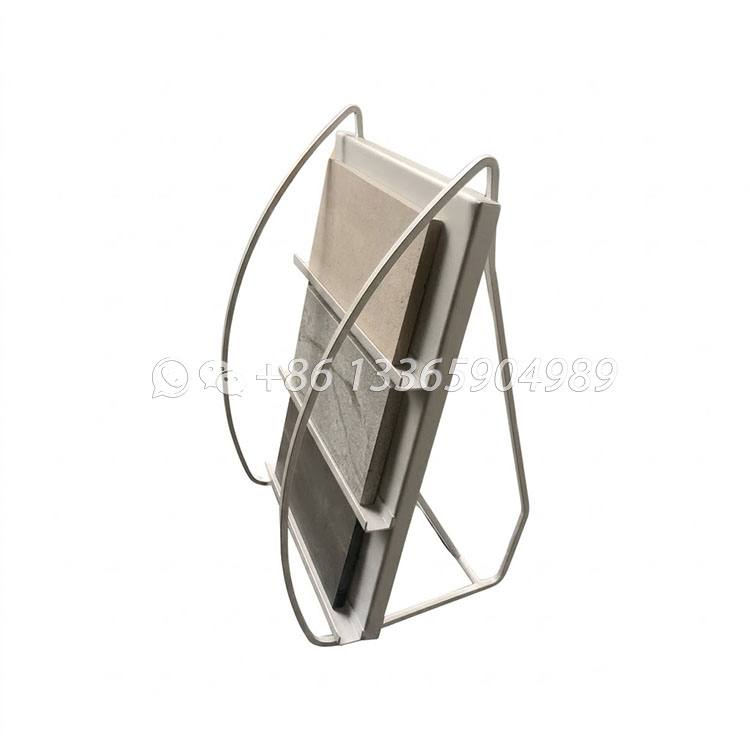
Compact cabinet with multiple pull-out trays for stone tile samples. Metal frame with stone veneer exterior, convenient for pulling out stone swatches to compare textures in tile stores and showrooms.
We keep the RACKS in stock across 3 standard widths and 5 slot configurations. Most orders ship within 7 business days because we build frames ahead of demand.