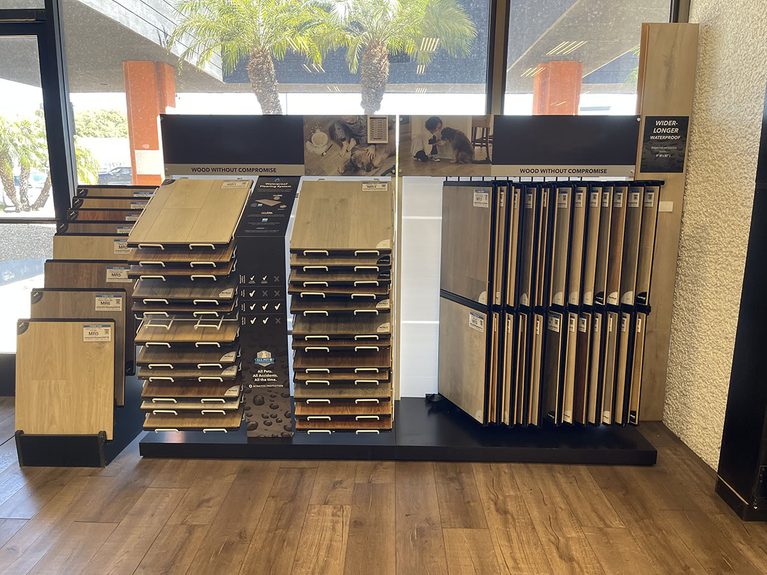
How to Import Tile Display Racks from China: A Complete Guide
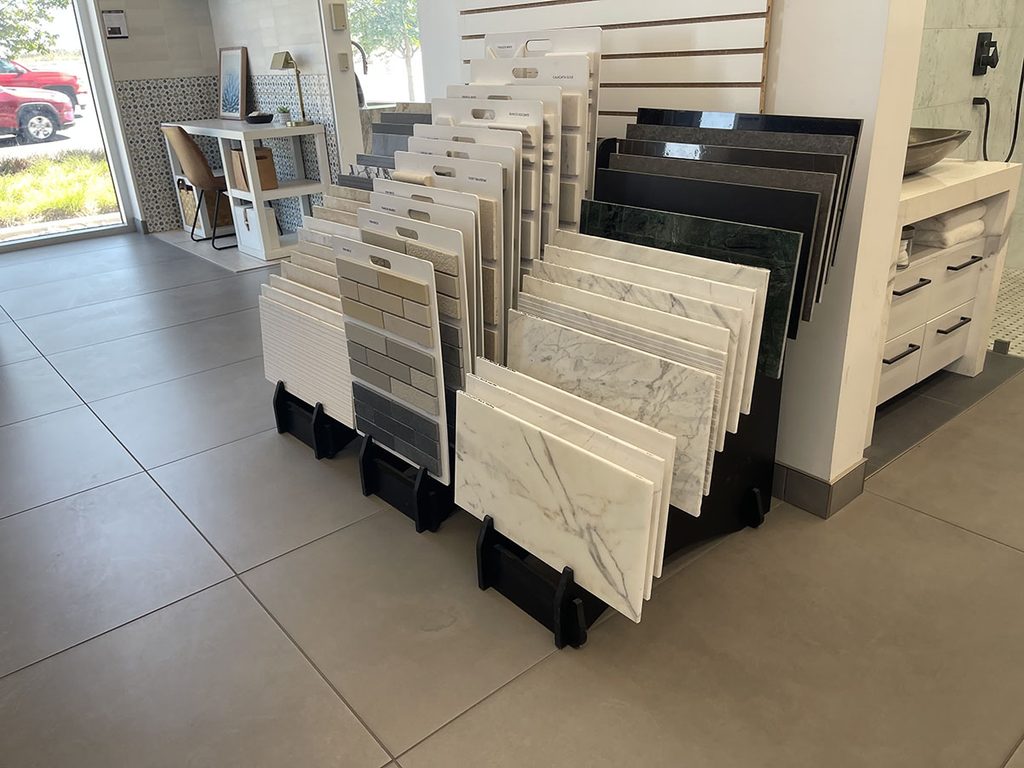
Tile display racks are the fixtures a tile, stone, or flooring retailer uses to show products to buyers — pull-out panels, rotating carousels, sample books, waterfall racks, and slab stands. If you sell surface materials, your display system is one of the few purchases that pays for itself, because customers buy what they can see and touch.
Most importers source these racks from China for one reason: cost. A custom rack built to your exact dimensions, finish, and branding usually costs a fraction of what the same unit sells for domestically, and Chinese factories are set up to build small, customized batches that Western fabricators often won’t touch.
Here’s the whole process, step by step.
Why Import Tile Display Racks from China?
Is the Price Difference Real?
Yes, and it’s the main reason people do it. Chinese display-rack factories have been building retail fixtures for export for two decades. Labor, raw material, and overhead are lower, and the factories compete hard on price. For a custom metal rack with powder coating, you can often land it — including ocean freight — for less than the domestic manufacturing cost alone.
What you give up is speed and ease. A domestic supplier can ship in days; a Chinese factory needs weeks of production plus shipping time. If you can plan ahead, the savings usually win.
Can You Actually Get Custom Racks?
This is where China beats almost everyone. Most factories don’t want to sell you a stock rack off a shelf — they want your drawings and specs. Custom sizes, your logo, your color, your branding, a specific number of panels or slots. If you can describe it, they’ll quote it. We run 2,000+ mold styles, so there’s a good chance your “custom” rack already exists as a proven design.
Step 1: Find a Supplier Worth Your Time
Factory, Trading Company, or Both?
Most advice splits suppliers into two camps, but there’s a third that matters. A factory owns the production line, so pricing is usually sharper and you can visit the actual plant. A trading company doesn’t manufacture — it aggregates orders from multiple factories, which is useful if you’re buying a mix of products (racks plus sample books plus packaging) in one container. Trading companies add a margin but handle sourcing, QC, and export paperwork for you.
The third option is a manufacturer-exporter — industry and trade in one. One company both makes the racks and runs its own export, so you get factory pricing without a trading-company markup stacked on top.
Tsianfan Display is that model. The full company name is Xiamen Tsianfan Industrial & Trading Co., Ltd., and the “Industrial & Trading” part isn’t decorative — it runs its own 10,000 m² factory with five production lines, and the same team handles export, quality control, and paperwork. You deal with one company from the first drawing to the container loading.
If you’re buying one product category in volume, go factory. If you’re assembling a varied order, a good trading company saves you coordination. A manufacturer-exporter covers both.
Where Do Importers Find Suppliers?
Three places cover most of it:
- Alibaba and Made-in-China — the starting point. Filter by “verified supplier,” check how many years they’ve been trading, and read reviews.
- Trade shows — Coverings, Cersaie, and the Canton Fair. Nothing replaces standing in front of the rack and pulling on it.
- Referrals and direct outreach — ask other dealers who they buy from.
Whichever route you take, verify the supplier before you send money. Ask for their business license, get a video call showing the actual production floor, and check whether they’ve exported to your country before.
Step 2: Send an Inquiry That Gets a Real Quote
What Should Your Inquiry Include?
Vague inquiries get vague quotes. The more you specify, the more accurate the number — and the faster the supplier will take you seriously. Include:
- The rack type (pull-out, rotating, waterfall, slab, sample book)
- Dimensions — width, height, depth, number of panels or slots
- Material and finish (steel, aluminum, powder-coated, wood)
- Quantity you’re considering
- Your branding requirements (logo, color, packaging)
- Your destination port, so they can quote freight
If you have photos or a sketch, send them. A supplier who quotes without asking follow-up questions is guessing, and a guessed quote is worthless.
What’s a Typical MOQ and Lead Time?
MOQ is lower than most importers expect. For standard racks, MOQ often starts around 10–50 units, and custom orders can be flexible. Lead time for a custom run is usually 15–30 days of production, then shipping on top.
Ask for both the MOQ and the lead time in writing, and confirm whether the lead time is production only or includes transit. That distinction catches a lot of people.
Step 3: Confirm the Sample Before You Commit
Should You Order a Sample First?
Almost always, yes. Before you wire money for a container, pay for one sample rack. You’ll check the build quality, the finish, the welds, the weight, and whether the panel slides the way you expected. One sample costs a few hundred dollars and saves you from a full shipment of mistakes.
How Do You Verify Quality From Another Country?
You can’t hold the rack, so use everything else:
- Video calls walking through the production line
- Detailed photos at each stage — raw material, welding, coating, assembly
- A pre-production sample shipped to you
- Third-party inspection before the bulk order leaves
Most serious importers do all four. The sample is your baseline; the inspection confirms the bulk order matches it.
Step 4: Quality Control Before Shipment
What Should a Pre-Shipment Inspection Check?
If you can’t visit the factory, hire someone who can. A pre-shipment inspection typically checks:
- Dimensions against your spec sheet
- Welds, joints, and assembly strength
- Powder coat or paint finish for scratches and consistency
- Panel movement — do slides and hinges work smoothly
- Packaging — is each rack protected for ocean transit
- Quantity and labeling
Can You Hire a Third-Party Inspector?
Yes, and it’s standard practice. Companies like SGS, Bureau Veritas, and Intertek do pre-shipment inspections for a few hundred dollars, or your supplier can arrange one. It’s the cheapest way to catch problems while the factory can still fix them.
Step 5: Shipping and Customs
What Shipping Method Should You Choose?
Three options, and the right one depends on how much you’re buying:
| Method | Best for | Transit time | Cost per unit |
|---|---|---|---|
| Air freight | Urgent samples, small orders | 5–10 days | High |
| LCL sea freight | Small batches, partial containers | 20–35 days | Medium |
| FCL sea freight | Full containers, large orders | 20–35 days | Lowest |
For anything more than a handful of racks, sea freight wins. It’s slow, but the per-unit cost drops sharply as you fill a container.
What Do FOB, CIF, and DDP Mean?
These three terms decide who pays for what and where responsibility shifts:
- FOB (Free on Board) — the supplier covers everything up to loading the goods on the ship. You pay ocean freight, insurance, and import costs from there.
- CIF (Cost, Insurance, Freight) — the supplier pays freight and insurance to your port. You handle customs and delivery from the port.
- DDP (Delivered Duty Paid) — the supplier handles everything, including duties, and delivers to your door. Easiest, but you pay for the convenience.
New importers often start with DDP for simplicity, then move to FOB or CIF once they have a freight forwarder.
What About Import Duties and Taxes?
This is where you need your customs broker, because the numbers depend on the destination country and the product’s HS code. Tile display racks are usually classified as furniture or metal display fixtures — which is important, because they’re generally not subject to the anti-dumping duties that apply to ceramic tiles themselves.
Before you order, ask your broker to classify the rack and estimate the landed cost. Get the HS code right, and don’t let anyone misdeclare the goods to save duties — that’s how shipments get seized.
Step 6: Payment Terms That Protect You
What Payment Terms Are Normal?
| Term | What it means | Risk to you |
|---|---|---|
| T/T 30% deposit, 70% before shipment | Standard for new buyers | Low, once you trust the supplier |
| Letter of credit (L/C) | Bank guarantees payment on documents | Very low, but fees and paperwork |
| PayPal or card | Small orders and samples | Higher fees, but buyer protection |
| 100% upfront | Avoid unless it’s a tiny order | High |
The usual deal is a 30% deposit to start production and the 70% balance before the goods ship. A letter of credit adds cost and paperwork but is the safest way to pay a new supplier on a large order.
How Much Does Importing Actually Cost?
The rack is only part of the landed cost. Budget for all of these:
| Cost item | Typical share of landed cost |
|---|---|
| Product (ex-factory price) | 60–70% |
| Ocean freight and insurance | 10–20% |
| Duties and taxes | 5–15% |
| Inland delivery and customs broker | 5–10% |
Get a landed-cost quote for your specific order before you compare it to domestic pricing. “Cheaper from China” should mean cheaper after freight and duties, not just at the factory gate.
Common Mistakes to Avoid
- Skipping the sample. This is the most expensive mistake on this list.
- Guessing the HS code instead of asking a broker.
- Ignoring packaging. A beautifully made rack that arrives dented is worthless. Specify corner protection and inner bracing.
- Not confirming lead time includes transit.
- Choosing the cheapest quote without verifying the factory.
FAQ
How long does it take to import tile display racks from China?
Production is typically 15–30 days, plus 20–35 days by sea. Door to door, budget 6–9 weeks for a custom order.
What is the minimum order quantity?
For standard racks, often 10–50 units. Custom orders are flexible, but confirm the MOQ in writing before you design around it.
Are Chinese display racks good quality?
Quality varies by factory, which is exactly why samples and pre-shipment inspection matter. A verified factory with export history will produce to your spec.
Do I need an import license?
In most countries, no special license is needed for retail fixtures, but you’ll work with a customs broker. Confirm the rules for your country.
Can I put my own logo and branding on the racks?
Yes — this is standard. Factories build custom racks with your color, logo, and packaging.
What if the racks arrive damaged?
Inspect on arrival, document damage with photos, and file a claim with the shipping line or insurer. Specify protective packaging upfront to prevent most damage.
Should I use a freight forwarder?
If you’re importing a full container, yes. A forwarder handles booking, customs, and inland delivery and often saves you money over supplier-arranged freight.
Ready to Import Tile Display Racks?
You don’t have to figure out the specs alone. Tell us the rack type, dimensions, and quantity you’re considering, and we’ll send a quote with the MOQ, lead time, and freight options for your port. Browse our product catalog or contact us — we’ve been building tile, stone, and flooring display racks for export since 2008, and we’re happy to send a sample before you commit to anything.