
high-capacity sample granite stone folder
The C frame uses CNC-welded joints throughout — every structural connection is a continuous weld bead, not a bolt and washer. This doubles the load rating compared to bolt-together designs.
Showing 1–20 of 114 resultsSorted by latest
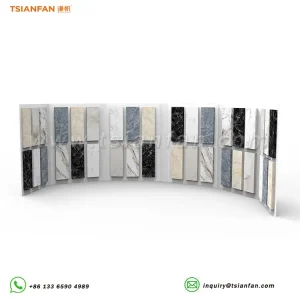
The C frame uses CNC-welded joints throughout — every structural connection is a continuous weld bead, not a bolt and washer. This doubles the load rating compared to bolt-together designs.
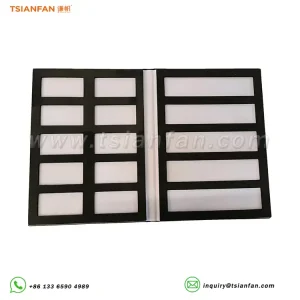
Natural stone slabs are heavy, irregular, and expensive to replace. The CATALOG was engineered around those realities — load-tested to 120kg per slot with a safety factor of 2.5.
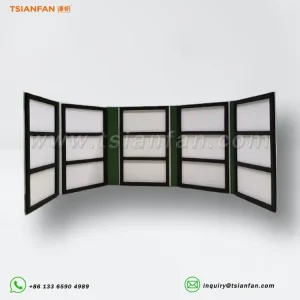
The CATALOGUE uprights are 45×45mm square tube with 2.5mm wall thickness. We publish the cross-section spec because we want you to compare it against anything else on the market.
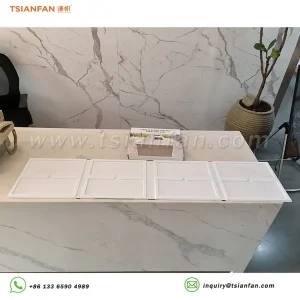
The FOLDING frame uses CNC-welded joints throughout — every structural connection is a continuous weld bead, not a bolt and washer. This doubles the load rating compared to bolt-together designs.
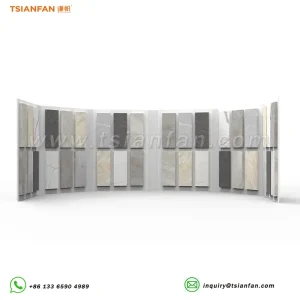
The 6 frame uses CNC-welded joints throughout — every structural connection is a continuous weld bead, not a bolt and washer. This doubles the load rating compared to bolt-together designs.

We manufacture the BOOKLET in our Xiamen facility where we control every step from steel procurement to final assembly. No subcontractors, no quality gaps.

The rail system on the BOOK uses ball-bearing sliders rated at 10,000+ cycles. That is roughly 5 years of daily use in a busy showroom before any maintenance is needed.

We designed the FOLDER after visiting 30+ tile showrooms and noticing the same bottleneck: staff wasting time lifting heavy sample boards. This rack lets one person reorganize an entire display wall i
The FOLDER frame uses CNC-welded joints throughout — every structural connection is a continuous weld bead, not a bolt and washer. This doubles the load rating compared to bolt-together designs.

A sample book is often the first physical interaction a client has with your brand. The BOOK PU leather cover with rigid inserts conveys quality before a single page is turned.

We engineered the BOOKS center of gravity 40% below the frame midpoint after studying how customers interact with stone displays. They lean slabs forward to see the polished face, and the rack must no

Stone importers tell us their biggest display headache is racks that develop a permanent lean toward the front. The 1 has full-frame gusset plates at all four corners specifically to prevent this.

Quartz, granite, and marble each have different weight characteristics. The 8 slot geometry was optimized for the average density range of natural and engineered stone, with extra reinforcement at the

The 3 frame starts as cold-rolled steel tube, cut and welded on CNC jigs to maintain consistent slot spacing across every unit. No shims, no field adjustments needed.

Quartz, granite, and marble each have different weight characteristics. The 6 slot geometry was optimized for the average density range of natural and engineered stone, with extra reinforcement at the

The 16 contact pads are made from EPDM rubber — the same material used in permanent outdoor gaskets. They won’t degrade, stain, or transfer color to light-colored stone surfaces.
Stone showrooms face constant tension: display more products to sell more, but do not overcrowd the space. The 8 uses a staggered front-to-back layout that shows every slab face from a single aisle.

Unlike welded display fixtures that ship in bulky crates, the 4 packs flat to roughly 12% of its assembled volume. This cuts your freight cost and simplifies receiving.
We plate the 4 with a zinc-phosphate corrosion barrier before powder coating. It is the same three-stage finishing process used on outdoor architectural steel, because showroom humidity is just as unf

Showroom managers love the 10 because samples stay clean longer — the angled display means less dust settles on the tile faces, reducing daily cleaning time.