Flooring Display Racks: A Complete Guide for Wood & Laminate Showrooms
Selling flooring is a strange business. The product is a long, flat board, and most of what makes it worth buying (the grain, the sheen, the way it catches the light) doesn’t translate to a tiny swatch or a phone photo. A customer has to see the full board, run a thumb over the bevel, and tilt it toward the window. That’s what a flooring display rack is for.
This guide covers the rack types on the market, what wood and laminate planks specifically need, and how to choose something that moves product instead of just filling floor space.
Why flooring needs its own kind of display
Flooring samples are awkward. They’re long, usually between 12 and 36 inches for a display piece. They’re heavy in bulk. And they need to sit at a slight angle so the finish shows, rather than flat on a table where the surface reads as a dark smear.
A rack built for tiles won’t do the job. Tile display racks hold square panels upright and let customers flip through them. Flooring planks are narrower and longer, so they need a different footprint. Get this wrong and you end up with warped samples, scuffed edges, and a wall that looks messy instead of premium.
A good flooring display does three jobs at once: it keeps samples organized, it shows them in the best light, and it signals that you take your product seriously. That last one matters more than most retailers admit.
The main types of flooring display racks
How you want customers to browse decides which system fits. These are the six styles we build under our wooden floor display rack range.
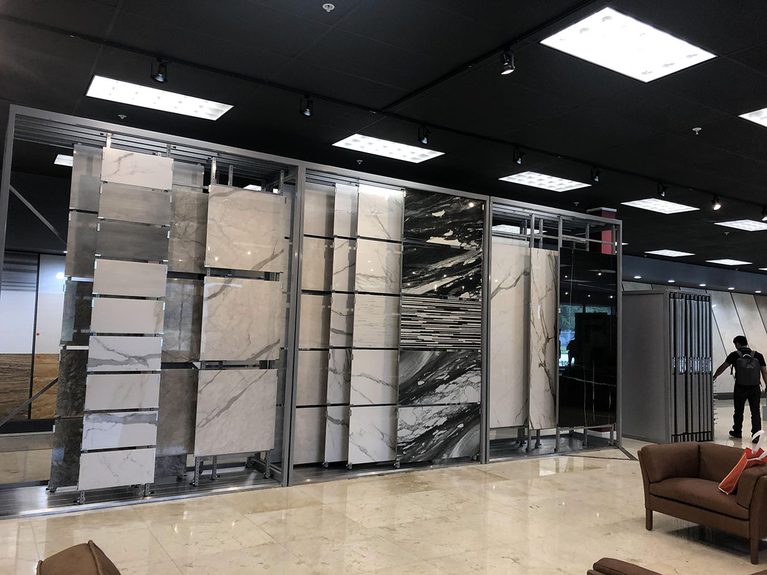
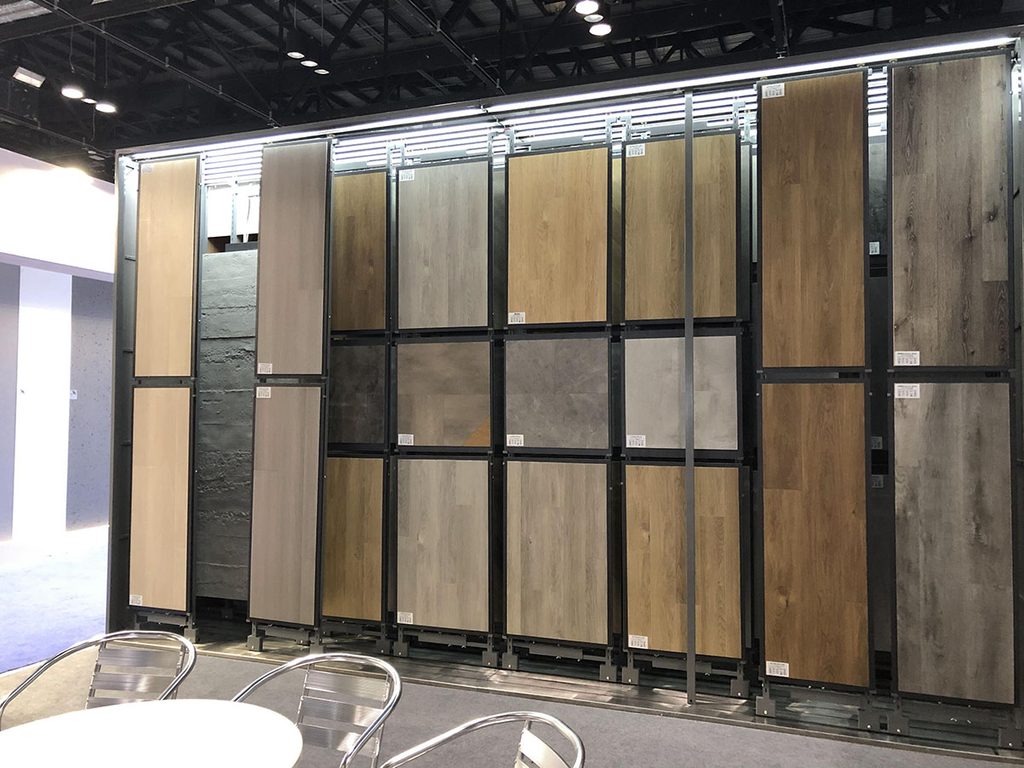
Combination Displays. A technical wall that packs several browsing styles into one frame, with slots, panels, and shelves working together. It’s the pick when a showroom has to present a large range without giving each line its own rack. Because the modules mix and match, you can reconfigure the wall as your stock changes.
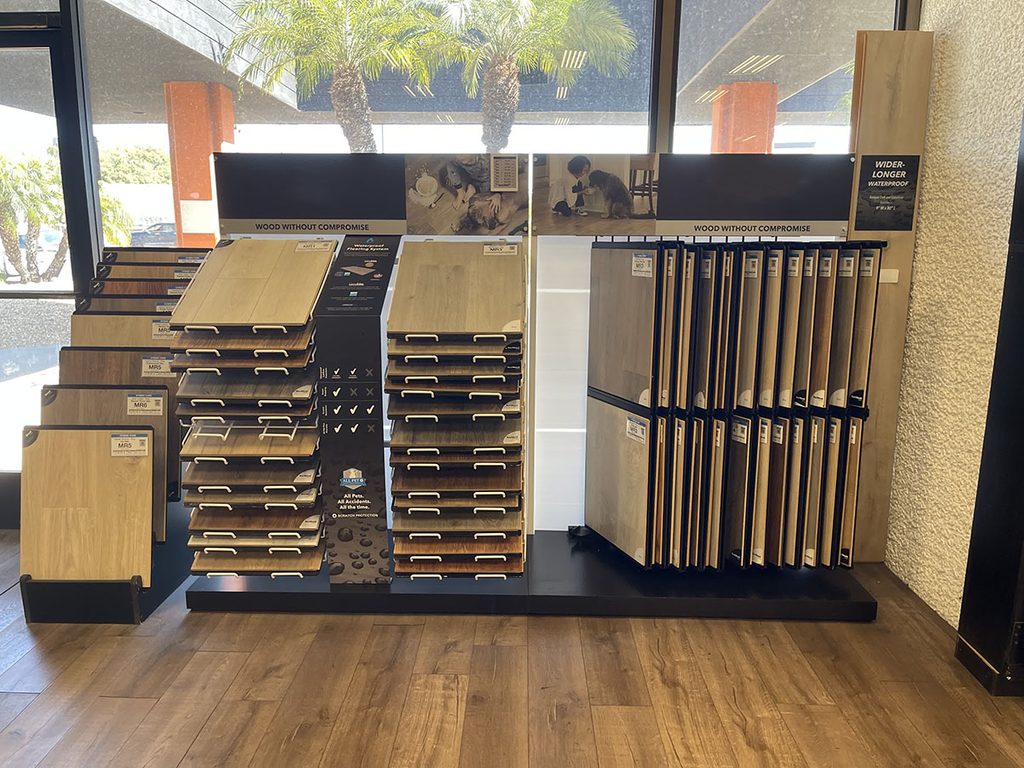
Displays Cabinet. Closed storage meets display. Timber samples sit behind doors or on cabinet shelves, which keeps dust off the boards and gives the room a tidier, more upscale feel. The trade-off is that customers have to open or reach in, so it suits a curated, higher-priced range rather than a wall of budget options.
Hand Panel Slot Displays. Individual boards slide into vertical slots so each sample lifts out and can be handled. It’s the classic pull-it-off-the-wall experience, and it’s why the format works so well for wood: a customer takes the exact board they like, tilts it under the light, and puts it back without disturbing the rest.
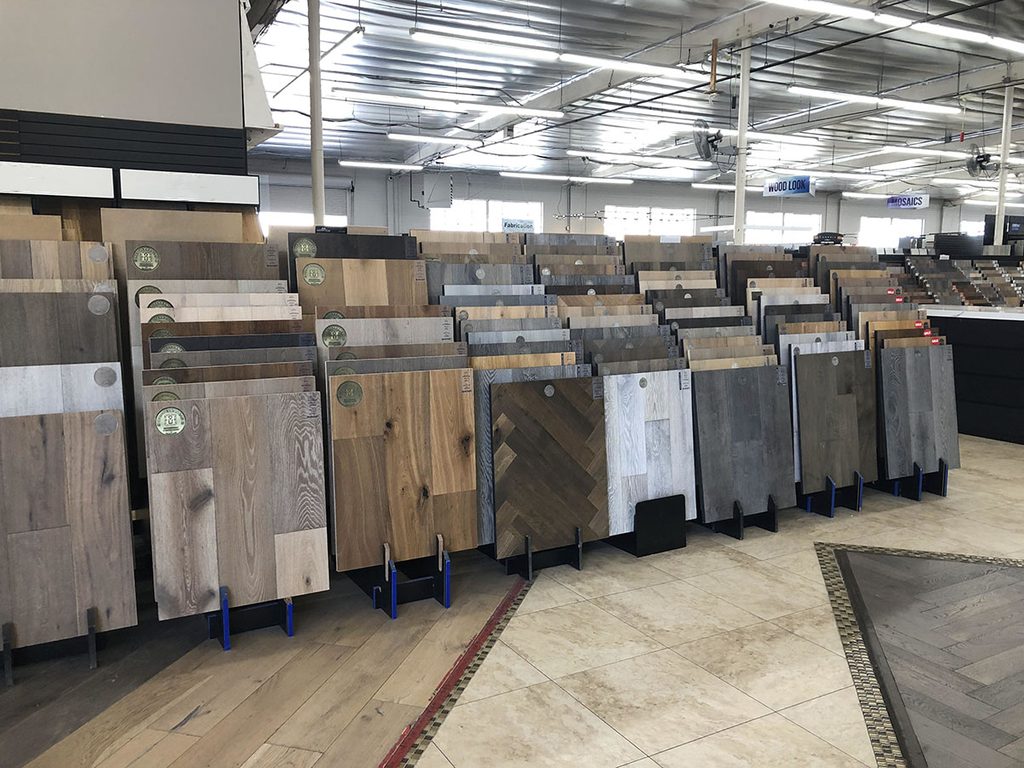
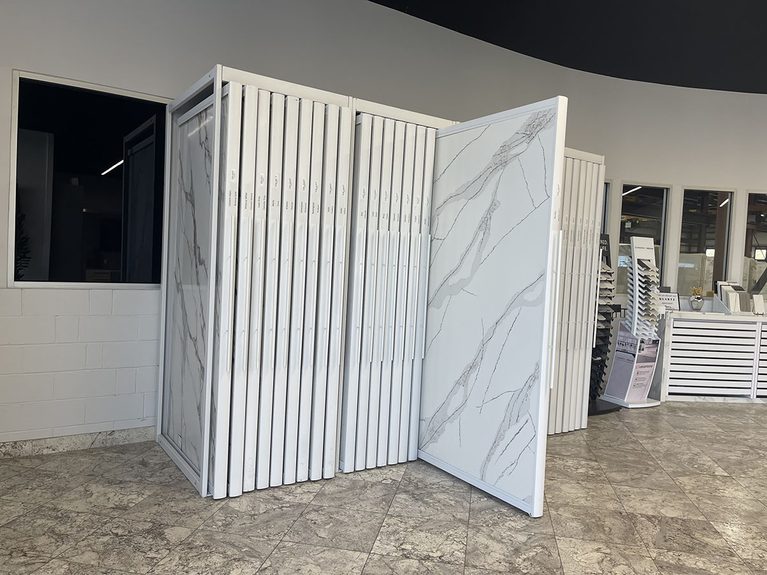
Horizonal Side Sliding Displays. Samples are mounted flat and slide from side to side, like a row of drawers opened sideways. The boards stay protected when closed and fan out for comparison when open, which makes side-by-side grain and color matching quick.
Pull-out Displays. Flooring boards sit in trays that pull straight out. Each tray holds a short run of samples, so a salesperson can walk a customer through one line at a time. It keeps the showroom compact and the boards flat, which matters for engineered and solid wood that shouldn’t stand at a sharp angle.
Rotating Displays. A rotating timber rack lets two customers browse opposite sides at once and doubles your capacity without taking more floor space. It works best in the middle of a showroom or near a counter, where people naturally circle around.
Most showrooms start with a combination wall or slot panels for the main range, then add a pull-out or rotating unit for the premium boards. The mix usually comes down to floor space and how hands-on you want the browsing to be.
What wood and laminate planks actually need
Wood flooring is not one product. A solid oak board behaves differently from an engineered plank, and laminate is another thing entirely. The rack has to respect those differences.
Solid and engineered wood are heavy. A rack holding 50 full-length samples is carrying real weight, so the hinges and panels need to be steel or thick powder-coated metal, not light-gauge wire. Sagging panels are the fastest way to make an expensive range look cheap.
With wood, the finish is the whole story. Samples should sit at a shallow angle, around 15 to 20 degrees, so overhead light rakes across the grain instead of bouncing straight back. Too flat and the board looks dull. Too steep and you’re showing the room, not the floor.
Laminate and LVT are lighter, so you can pack more planks per panel. But they fade and scratch more easily than wood, which means panels should slide out without the boards rubbing against each other. Watch the clearance between samples.
One detail people forget: leave room for new lines. Flooring ranges change constantly, and if the rack is at capacity the day it arrives, you’ll be ordering a second one in six months.
Choosing a rack: the seven things that matter
- How many SKUs you need to show. Count your current range, then add a third. That’s your target capacity.
- Sample length and weight. Full-length boards need hand panel slot displays or pull-out trays. Short chips can go on a combination wall. Match the rack to the heaviest board you sell, not the average.
- Floor footprint. A slot-panel display that holds 80 samples takes about two square meters. In a 40-square-meter showroom that’s a real cost, so map the space before you order.
- Lighting. The rack’s angle only works if the light is in the right place. Plan the display and the lighting together.
- Build quality. Check the hinge hardware, the gauge of the metal, and the edge finish. Those are the parts that fail.
- Portability. If your team does site visits or trade shows, a lightweight slot panel or a collapsible unit earns its keep. If the rack never moves, spend that budget on capacity instead.
- Custom branding. Your logo and colors turn a piece of furniture into part of your brand. Most manufacturers add this for a modest upcharge.
Custom vs. stock racks
Stock racks are faster and cheaper. They ship in days, and if your samples are standard sizes a stock slot-panel unit will usually do the job.
Custom makes sense when you have unusual sample sizes, a specific color scheme, or a layout a standard unit can’t fit. It also lets you match the rack to your brand, from the panels to the headers to the lighting tracks.
The gap between the two has narrowed. Many manufacturers, including us at Tsianfan, run semi-custom lines where you adjust dimensions and colors within a standard frame. You get most of the benefits of custom without the tooling cost or the wait.
Laying out a showroom that sells
Put the premium range where the customer walks first. A lot of showrooms bury the expensive boards in the back and lead with the budget line, which is backwards.
Angle the racks so the boards face the door and the main path, not the wall. People browse with their eyes first.
Keep a small rotating display near the counter or the seating area. That’s where the “while you wait” decisions happen.
Leave a strip of clear wall for the current promotion. Flooring trends move, and your display should be able to move with them.
Frequently asked questions
How many samples fit on a typical flooring display rack?
A standard slot-panel display holds roughly 60 to 80 full-length planks. A displays cabinet holds fewer but keeps the boards dust-free and gives a tidier look.
Do I need different racks for wood and laminate?
Not necessarily. The same slot-panel design works for both, but wood’s extra weight calls for heavier-duty hinges and panels. If you stock both, buy a rack rated for the heavier product.
What is the typical MOQ for custom flooring display racks?
It varies by manufacturer. Small runs are usually possible, though unit cost drops meaningfully at higher quantities. Ask for quotes at two or three volume points before you decide.
How long does a custom rack take to produce?
Lead times typically run two to five weeks depending on the level of customization and your location. Stock racks ship much faster.
Do you ship flooring display racks internationally?
Yes. We ship flat-packed racks to more than 80 countries, and the designs are built to survive container shipping. Panels are packed so they don’t rub in transit.
Getting the right rack the first time
The short version: buy for the heaviest board you sell, show the premium range first, and plan the lighting with the rack. Get those three right and the rest is details.
If you’re setting up or refreshing a flooring showroom and want to talk through options, we build combination walls, slot panels, pull-out, rotating, and custom flooring displays at our Xiamen factory. We’ve equipped more than 500 showrooms across 80-plus countries since 2008. Browse the range on our product page, or get in touch and tell us what you’re showing. We’ll point you at the right rack and send a quote.