
quartz stone wood cardboard sample plastic eva folder
The FOLDER frame uses CNC-welded joints throughout — every structural connection is a continuous weld bead, not a bolt and washer. This doubles the load rating compared to bolt-together designs.
Showing 461–480 of 2776 resultsSorted by latest

The FOLDER frame uses CNC-welded joints throughout — every structural connection is a continuous weld bead, not a bolt and washer. This doubles the load rating compared to bolt-together designs.

A sample book is often the first physical interaction a client has with your brand. The BOOK PU leather cover with rigid inserts conveys quality before a single page is turned.

We engineered the BOOKS center of gravity 40% below the frame midpoint after studying how customers interact with stone displays. They lean slabs forward to see the polished face, and the rack must no

Stone importers tell us their biggest display headache is racks that develop a permanent lean toward the front. The 1 has full-frame gusset plates at all four corners specifically to prevent this.

Quartz, granite, and marble each have different weight characteristics. The 8 slot geometry was optimized for the average density range of natural and engineered stone, with extra reinforcement at the

The 3 frame starts as cold-rolled steel tube, cut and welded on CNC jigs to maintain consistent slot spacing across every unit. No shims, no field adjustments needed.

Quartz, granite, and marble each have different weight characteristics. The 6 slot geometry was optimized for the average density range of natural and engineered stone, with extra reinforcement at the

The 16 contact pads are made from EPDM rubber — the same material used in permanent outdoor gaskets. They won’t degrade, stain, or transfer color to light-colored stone surfaces.
Stone showrooms face constant tension: display more products to sell more, but do not overcrowd the space. The 8 uses a staggered front-to-back layout that shows every slab face from a single aisle.

Unlike welded display fixtures that ship in bulky crates, the 4 packs flat to roughly 12% of its assembled volume. This cuts your freight cost and simplifies receiving.
We plate the 4 with a zinc-phosphate corrosion barrier before powder coating. It is the same three-stage finishing process used on outdoor architectural steel, because showroom humidity is just as unf

Showroom managers love the 10 because samples stay clean longer — the angled display means less dust settles on the tile faces, reducing daily cleaning time.

Stone importers tell us their biggest display headache is racks that develop a permanent lean toward the front. The 9 has full-frame gusset plates at all four corners specifically to prevent this.
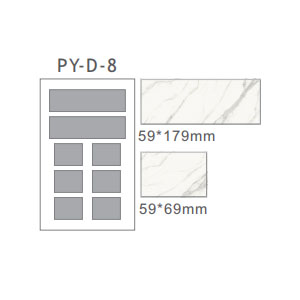
The 8 contact pads are made from EPDM rubber — the same material used in permanent outdoor gaskets. They won’t degrade, stain, or transfer color to light-colored stone surfaces.

When your tile collection changes seasonally, your display system should keep up. The 5 uses adjustable slot brackets that reposition without tools — lift, slide, lock.
The 10 is built for showrooms that handle large-format porcelain slabs daily. Its frame geometry distributes weight evenly across the rail system so panels glide without binding, even when loaded to c
We manufacture the 8 in our Xiamen facility where we control every step from steel procurement to final assembly. No subcontractors, no quality gaps.
Showrooms in coastal cities face salt-air corrosion that eats standard powder coat in under a year. The 5 undergoes a 72-hour salt spray test before it leaves our facility.
Humidity in stone warehouses can be extreme. The 4 powder coat is applied at 90-110μm thickness — more than triple the industry minimum — with a zinc phosphate undercoat for corrosion resistance.

The slot liners on the SRT206 are made from EPDM rubber, the same material used in automotive weather seals. They do not harden, crack, or leave marks on your tile edges.