Showing 81–100 of 114 resultsSorted by latest
-

Quartz, granite, and marble each have different weight characteristics. The SR112 slot geometry was optimized for the average density range of natural and engineered stone, with extra reinforcement at
-

The rail system on the E039 uses ball-bearing sliders rated at 10,000+ cycles. That is roughly 5 years of daily use in a busy showroom before any maintenance is needed.
-

When an architect visits your showroom to specify stone for a project, they need to see full slabs on display. The SRT112 presents each slab at a 7° tilt-back angle that keeps it stable without clampi
-

Natural stone varies in thickness from 10mm to 30mm, and your display rack must handle that range. The SRL225 slots accept the full thickness spectrum without adapter plates or shims.
-


Quartz, granite, and marble each have different weight characteristics. The SRL224 slot geometry was optimized for the average density range of natural and engineered stone, with extra reinforcement a
-
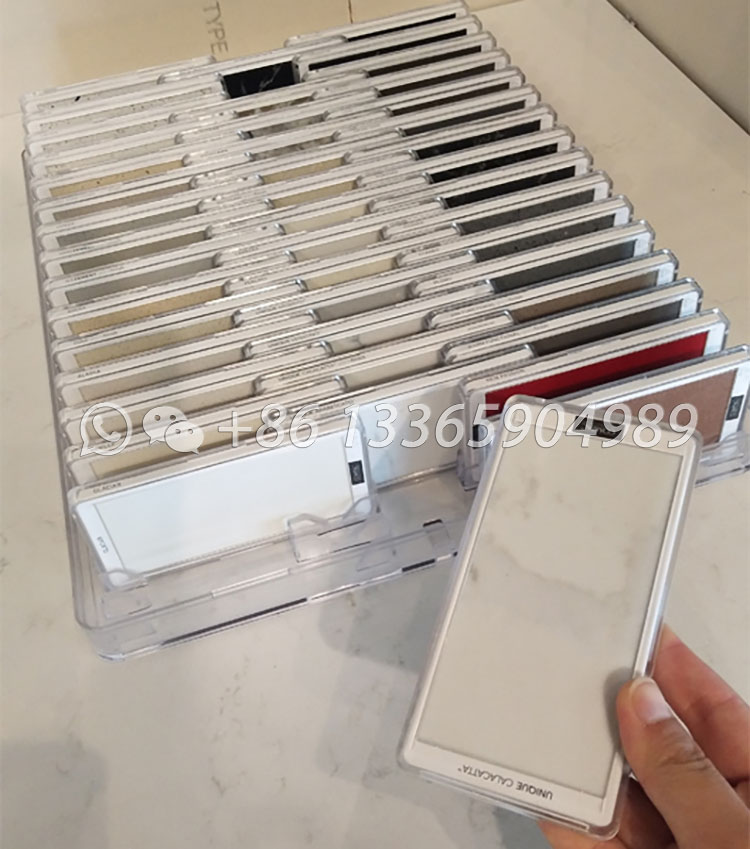
The SRT111 was first prototyped for a Dubai-based stone importer who needed display racks that could survive in 45°C warehouse heat without the powder coat peeling. That prototype is still in service
-
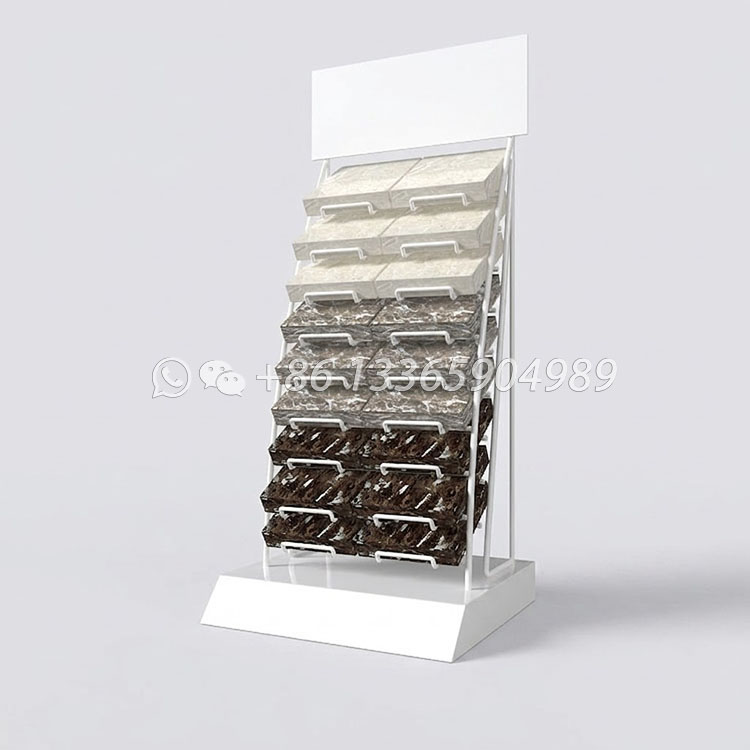
Quartz, granite, and marble each have different weight characteristics. The STAND slot geometry was optimized for the average density range of natural and engineered stone, with extra reinforcement at
-

Natural stone slabs are heavy, irregular, and expensive to replace. The 312 was engineered around those realities — load-tested to 120kg per slot with a safety factor of 2.5.
-

Quartz, granite, and marble each have different weight characteristics. The SRT083 slot geometry was optimized for the average density range of natural and engineered stone, with extra reinforcement a
-

Stone importers tell us their biggest display headache is racks that develop a permanent lean toward the front. The SRT021 has full-frame gusset plates at all four corners specifically to prevent this
-

Quartz, granite, and marble each have different weight characteristics. The SRT024 slot geometry was optimized for the average density range of natural and engineered stone, with extra reinforcement a
-

We manufacture the SRT029 with frame tolerances borrowed from industrial pallet racking. Not because display stands belong in warehouses, but because wobbling is unacceptable when presenting a $3,000
-

Natural stone varies in thickness from 10mm to 30mm, and your display rack must handle that range. The SRT035 slots accept the full thickness spectrum without adapter plates or shims.
-

Humidity in stone warehouses can be extreme. The SRT065 powder coat is applied at 90-110μm thickness — more than triple the industry minimum — with a zinc phosphate undercoat for corrosion resistance.
-

Stone importers tell us their biggest display headache is racks that develop a permanent lean toward the front. The SRT209 has full-frame gusset plates at all four corners specifically to prevent this
-

We manufacture the SRT304 in the same facility where we build industrial storage systems, which is why the load ratings on our display racks are conservative rather than aspirational.
-

Floor space in a retail showroom runs $20-50 per square foot. The E2034 holds up to 18 full-size tile samples in roughly 4 square feet — less than a standard pallet.
-

Natural stone varies in thickness from 10mm to 30mm, and your display rack must handle that range. The SRT2023 slots accept the full thickness spectrum without adapter plates or shims.
-

Stone showrooms face constant tension: display more products to sell more, but do not overcrowd the space. The SRT2024 uses a staggered front-to-back layout that shows every slab face from a single ai
-

Quartz, granite, and marble each have different weight characteristics. The SRT2029 slot geometry was optimized for the average density range of natural and engineered stone, with extra reinforcement